
Proven SaaS Retention Metrics That Drive Business Success
In Software as a Service, customer retention is a key driver of business success. Companies that prioritize retention not only lower their costs but also enhance customer satisfaction and loyalty. In the long run, focusing on retention metrics can lead to sustainable growth and increased Customer Lifetime Value (CLV). This article explores proven SaaS retention metrics that can guide organizations in refining their strategies, improving customer relationships, and ultimately driving overall business success.
Understanding the Importance of SaaS Retention Metrics
Retention metrics are critical indicators of how well a company is maintaining its customer base. In the SaaS industry, where subscription-based models dominate, understanding retention is imperative. High retention rates signal that customers find value in the product, reducing the need for expensive acquisition efforts. Notably, acquiring a new customer can cost five to 25 times more than retaining an existing one. Thus, focusing on retention not only enhances profitability but also fosters a loyal customer base that can provide valuable feedback for product improvements.
Moreover, retention metrics provide insights into customer behavior and preferences. By analyzing these metrics, companies can identify patterns that may indicate churn risks before they occur. This proactive approach allows businesses to implement strategies that address the specific needs and concerns of their users. It also helps in segmenting customer bases to understand which groups require different engagement strategies, ensuring that resources are allocated effectively.
Finally, the importance of retention metrics extends beyond simple numbers. When organizations embrace these metrics, they foster a culture centered around customer success. This cultural shift can lead to better communication between teams, aligning marketing, sales, and product development efforts to meet customer needs. Consequently, a strong retention focus can create a cycle of success that reinforces the value of the SaaS offering.
Key Metrics to Measure Customer Retention Effectively
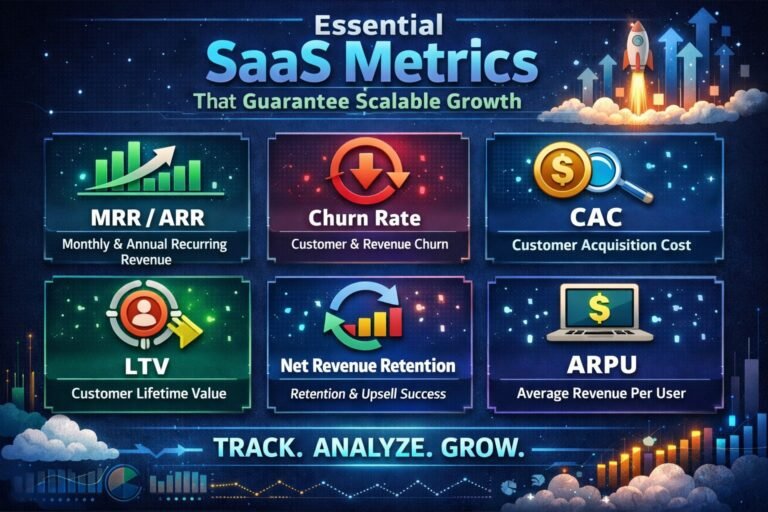
Several key metrics can provide a comprehensive picture of customer retention in a SaaS environment. The first of these is the Net Retention Rate (NRR), which calculates revenue growth from existing customers, accounting for upgrades, downgrades, and churn. A high NRR indicates that a company is effectively upselling or cross-selling its services while managing churn rates. Companies with an NRR above 100% are often seen as thriving, as they are expanding their revenue base without relying heavily on new customer acquisition.
Another essential metric is the Customer Churn Rate, which quantifies the percentage of customers that discontinue their subscriptions during a given timeframe. By closely monitoring churn rates, organizations can identify trends and determine the factors contributing to customer loss. A high churn rate might suggest issues in product satisfaction or inadequate customer support. Understanding the reasons behind churn can empower teams to implement targeted retention strategies that address specific challenges.
Customer Engagement Score is also an important metric that gauges how actively customers are using the service. This can be measured through various indicators such as login frequency, feature usage, or time spent on the platform. An increase in engagement often correlates with higher retention rates, as customers who actively use a product are less likely to leave. By continuously analyzing engagement scores, companies can make data-informed decisions regarding feature enhancements and customer support initiatives.
Analyzing Customer Lifetime Value for SaaS Success
Customer Lifetime Value (CLV) is a crucial metric that helps organizations understand the long-term value of acquiring and retaining customers. It represents the total revenue a business can expect from a single customer over the duration of their relationship. Understanding CLV allows companies to assess how much they can afford to spend on customer acquisition while still maintaining profitability. By optimizing marketing efforts based on CLV, organizations can target high-value customer segments, ensuring that their resources yield the best returns.
Calculating CLV involves considering several factors, including average revenue per user (ARPU), gross margin, and average customer lifespan. By evaluating these elements, organizations can create a clear picture of their customer’s financial contribution over time. Moreover, this analysis can help in segmenting customers based on their CLV, allowing for personalized marketing strategies that cater to the specific needs of high-value segments.
Finally, organizations can leverage CLV insights to enhance product development and customer service initiatives. By understanding the characteristics of high CLV customers, companies can prioritize features and support that resonate with this group. This alignment not only improves retention rates but also fosters a culture of continuous improvement, ultimately leading to enhanced customer satisfaction and loyalty.
Identifying Churn Rate and Its Impact on Growth
Churn rate is one of the most significant metrics in a SaaS business model. A high churn rate can severely impact growth, as losing customers not only reduces revenue but also increases the pressure on teams to acquire new customers. The cost of acquiring new customers can be particularly high, and if churn rates are not managed effectively, the overall business model can become unsustainable. Therefore, understanding the factors driving churn is essential for any SaaS organization aiming for long-term success.
Analyzing churn data can reveal trends and insights about customer behavior. It helps identify which features may be underperforming or which customer segments are more prone to leaving. By segmenting churn data, companies can tailor their engagement strategies to address specific pain points. For instance, if a particular demographic shows higher churn, targeted campaigns can be initiated to improve their experience and address their unique challenges.
Moreover, reducing churn can have a multiplicative effect on growth. Studies show that even a small reduction in churn can lead to significant revenue increases over time. Companies that manage to lower their churn rates can allocate more resources to innovation and customer experience improvements, further enhancing their competitive edge. Ultimately, focusing on churn reduction not only stabilizes revenue streams but can also catalyze accelerated growth.
Implementing Net Promoter Score in SaaS Strategies
Net Promoter Score (NPS) is a valuable metric for gauging customer satisfaction and loyalty. It measures how likely customers are to recommend a product or service to others, providing insights into customer sentiment. Implementing NPS surveys can help SaaS businesses understand their customer base on a deeper level, identifying advocates and detractors. This information is crucial for formulating strategies that enhance the overall customer experience.
A high NPS indicates strong customer loyalty and satisfaction, suggesting that a company is meeting or exceeding customer expectations. Conversely, a low NPS can serve as a warning signal that improvements are necessary. By regularly measuring NPS and analyzing the feedback behind the scores, organizations can identify specific areas that require attention. For example, if customers express concerns about product usability, teams can prioritize user experience enhancements accordingly.
Furthermore, NPS can also be tied to customer lifetime value. Customers who are more likely to recommend a product tend to have higher CLV, as they often lead to referrals that can generate new business. Thus, a proactive approach to improving NPS can not only enhance customer satisfaction but can also drive growth. Incorporating NPS into overall business strategies allows organizations to maintain a pulse on customer sentiment, ensuring that they remain agile and responsive to changing customer needs.
Leveraging Customer Engagement Metrics for Retention
Customer engagement metrics are critical in understanding how effectively a SaaS company is maintaining its user base. These metrics often include active user counts, feature usage frequency, and overall time spent within the application. By analyzing these indicators, organizations can identify which elements of their service resonate most with customers and which may require improvement. A strong correlation often exists between engagement levels and retention; customers who actively engage with a product are less likely to churn.
Some companies use customer engagement scores to categorize users into segments, allowing for tailored marketing efforts. For instance, users who frequently utilize specific features may appreciate advanced functionalities or premium upsells, while those with lower engagement may benefit from onboarding sessions or targeted tutorials. By personalizing customer interactions based on engagement metrics, SaaS organizations can foster stronger relationships and improve overall retention rates.
Additionally, understanding customer engagement can help in forecasting future revenue streams. High engagement levels often correlate with lower churn rates, enabling companies to make more accurate projections of future growth. This understanding allows SaaS businesses to allocate resources effectively and invest in areas that will yield the highest returns. By leveraging customer engagement metrics, organizations can cultivate a loyal user base that contributes to sustained growth.
Crafting Action Plans Based on Retention Insights
Developing actionable strategies based on retention insights is vital for improving customer loyalty and business performance. First, organizations should implement regular reviews of their retention metrics to identify trends and areas for improvement. These reviews should involve cross-functional teams with various perspectives, ensuring that all aspects of the customer journey are considered. By adopting a holistic approach, companies can develop more effective strategies that address the underlying causes of churn.
Next, organizations should prioritize targeted interventions based on the insights gathered. For instance, if churn analysis reveals that customers are leaving due to poor customer service, it may be beneficial to invest in training support staff or enhancing self-service options. Alternatively, if engagement scores indicate that users are unfamiliar with key features, proactive onboarding initiatives can be introduced to guide customers in using the product effectively. Implementing these targeted actions based on retention insights can significantly improve customer satisfaction and loyalty.
Finally, a continuous feedback loop should be established to monitor the effectiveness of these interventions. By assessing the impact of retention strategies over time, organizations can refine their approaches and ensure they remain aligned with customer needs. This iterative process fosters a culture of continuous improvement that can adapt to changing market dynamics and customer expectations. In doing so, companies not only enhance retention but position themselves for sustained long-term success.
Real-World Examples of SaaS Retention Success Stories
Several SaaS companies have effectively implemented retention strategies that have yielded impressive results. For instance, Slack, a collaboration tool, has maintained high user engagement through continuous feature enhancements and a user-friendly interface. Its commitment to customer feedback allows for quick iterations, thereby increasing overall user satisfaction. Slack’s focus on understanding and improving its retention metrics has played a significant role in its rapid growth and widespread adoption.
Another example is HubSpot, a marketing, sales, and service platform that has excelled in customer retention by offering extensive educational resources and personalized customer support. The company employs NPS and churn analysis to identify customers at risk of disengagement. As a result, HubSpot has developed tailored strategies, including webinars and one-on-one coaching, leading to a loyal customer base that consistently advocates for the brand.
Finally, Adobe has transitioned its software offerings to a subscription model, significantly improving customer retention. By providing regular updates, new features, and maintaining an active community of users, Adobe has fostered a strong connection with its customer base. Continuous engagement with its users has not only reduced churn rates but also increased upsell opportunities, showcasing the effectiveness of a well-implemented retention strategy in the SaaS landscape.
In the fast-paced SaaS environment, understanding and leveraging retention metrics is paramount for achieving business success. By focusing on key metrics such as churn rate, NPS, and customer engagement, companies can craft targeted strategies that foster loyalty and satisfaction. The stories of successful organizations illustrate the potential of a retention-focused approach. By prioritizing customer relationships and continuously refining their strategies, SaaS businesses can thrive in today’s competitive landscape.
Tags: SaaS, Retention Metrics, Business Success, Customer Engagement, Churn Rate, Customer Lifetime Value, NPS, SaaS Strategy, Marketing, Customer Experience