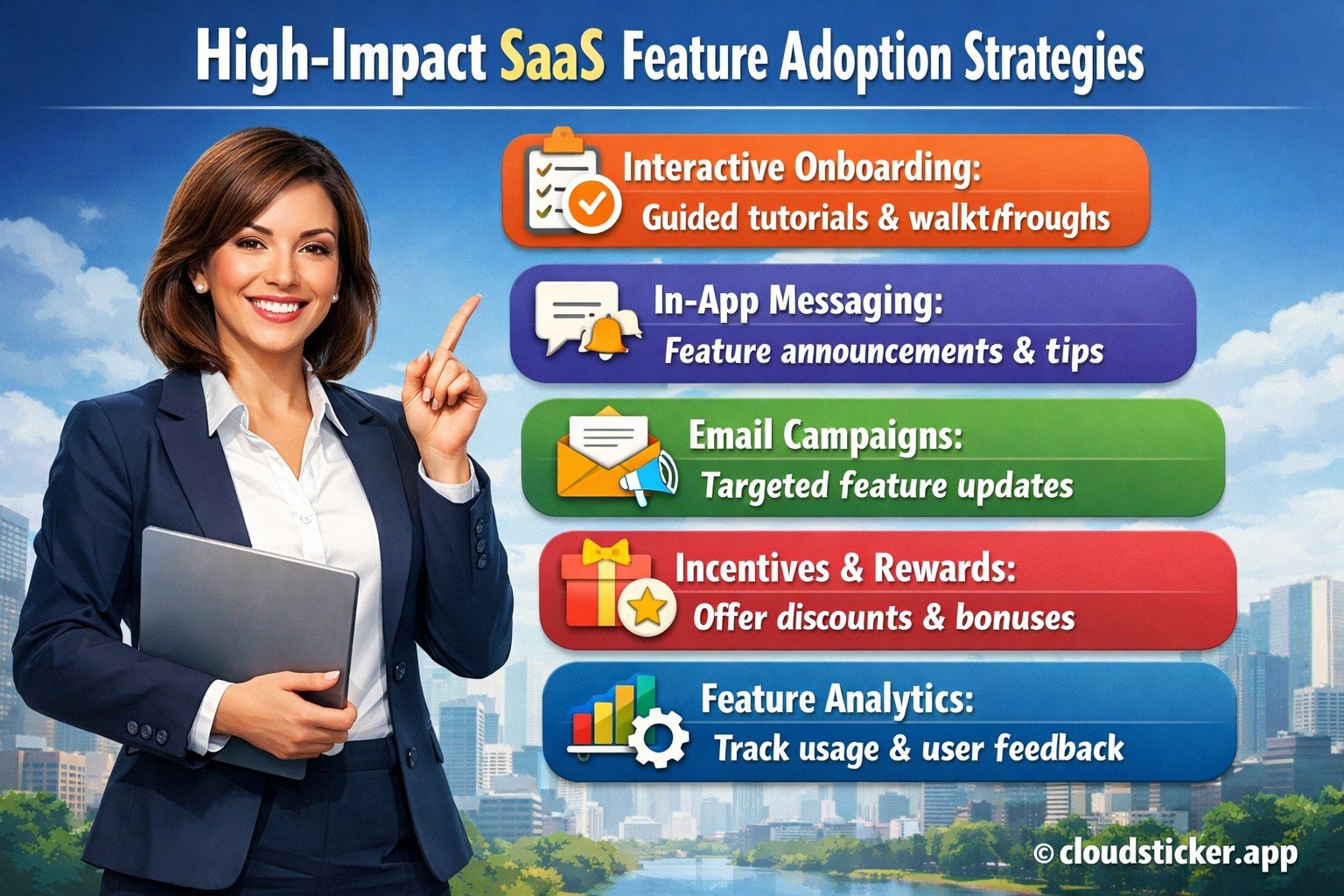
Understanding and driving feature adoption in Software as a Service (SaaS) is critical for maximizing user engagement and creating lasting customer relationships. In a highly competitive landscape, businesses must focus on techniques that not only promote awareness but also drive actual usage of new features. Fostering effective adoption can lead to increased satisfaction, retention, and ultimately, revenue growth. This article delves into high-impact strategies that organizations can implement to enhance feature adoption across their SaaS offerings.
Understanding the Importance of Feature Adoption in SaaS
High-Impact SaaS Feature Adoption Strategies within the SaaS ecosystem is not merely about rolling out new functionalities; it’s about ensuring that these features are utilized effectively by the end users. When users adopt features successfully, they derive greater value from the service, leading to higher satisfaction and loyalty. For organizations, this translates into reduced churn rates, increased lifetime value, and the potential for upselling and cross-selling additional services. Ultimately, enhanced feature adoption significantly impacts a company’s bottom line.
Moreover, features that go unused represent wasted resources and investments. Each new functionality requires time, effort, and financial resources to develop, launch, and maintain. If these features aren’t embraced by users, they can become a drain on the organization’s resources instead of a source of value. Understanding this, SaaS companies must prioritize feature adoption strategies as an integral part of their product development and marketing efforts.
Finally, as user needs and expectations evolve, so too must the efforts to drive adoption. Organizations must stay attuned to shifting trends, user feedback, and competitive landscape changes to ensure their features remain relevant and beneficial. This dynamic requires an ongoing commitment to understanding customer behavior and refining approaches to feature adoption continuously.
Key Metrics to Measure SaaS Feature Usage Effectively
To drive successful feature adoption, organizations must establish key performance indicators (KPIs) that provide actionable insights into feature usage. Metrics such as adoption rate, frequency of use, and retention rates for specific features are essential. The adoption rate can be calculated by comparing the number of users engaging with a feature against the total number of users capable of using it. This metric helps organizations identify which features are resonating and which may need further attention or promotion.
Additionally, tracking feature engagement over time offers insights into how often and in what context users are utilizing features. This can be measured through metrics like session length, feature interaction frequency, and user feedback scores. Understanding these metrics can help organizations determine whether users find value in the features, as well as guide future enhancements or training efforts.
Lastly, employing cohort analysis allows SaaS businesses to compare user behavior across different segments or timeframes. This can reveal patterns in feature adoption, indicating whether certain groups of users are more inclined to embrace new functionalities. By analyzing these metrics, organizations can tailor their feature adoption strategies to target specific user groups more effectively, ensuring that resources are allocated where they will have the greatest impact.
Techniques for Onboarding Users to New Features Seamlessly
A robust onboarding process is fundamental to successful feature adoption. Organizations should develop contextual onboarding experiences that guide users through new features as soon as they are introduced. This can include in-app tutorials, tooltips, and walkthroughs that provide step-by-step guidance. By delivering information at the right moment, users can better understand how to leverage new features and see their value immediately.
Another effective technique involves creating dedicated onboarding sessions, either through live webinars or on-demand videos. These sessions should not only demonstrate new features but also highlight practical use cases and benefits. By contextualizing the features within real-world scenarios, organizations can help users relate the functionalities to their own needs and workflows.
Feedback mechanisms during the onboarding process are also critical. By inviting users to provide feedback on their onboarding experience, companies can identify areas for improvement. This continuous feedback loop can enhance the onboarding process over time, ensuring it meets user expectations and effectively promotes feature adoption.
Leveraging User Feedback for Continuous Feature Improvement
User feedback plays a vital role in shaping feature development and adoption strategies. Engaging users through surveys, interviews, and usability testing can provide invaluable insights into how features are perceived and utilized. These insights can inform not only the development of new features but also enhancements to existing ones, ensuring that they align with user needs.
Furthermore, organizations should establish feedback channels that allow users to share their experiences and suggestions easily. This could include in-app feedback forms, community forums, and dedicated customer success initiatives. By creating a culture of open communication, companies can foster stronger relationships with their users, making them feel valued and heard.
Finally, it’s essential to act on the feedback collected. Demonstrating that user opinions lead to tangible changes can enhance trust and loyalty. Regularly updating users on how their feedback has influenced feature improvements reinforces the partnership between the organization and its customers, driving ongoing feature adoption and satisfaction.
Creating Engaging Content to Promote Feature Awareness
Effective content marketing is crucial for driving awareness and adoption of new features in a SaaS environment. Organizations should invest in diverse content formats, such as blog posts, case studies, video tutorials, and infographics, to communicate the benefits and usage of features clearly. Each piece of content should be designed to resonate with specific user segments, addressing their unique pain points and showcasing how the new functionalities can solve their problems.
Additionally, leveraging social media can amplify content reach. Sharing success stories, user testimonials, and engaging posts about new features can create buzz and encourage users to explore them. Social media platforms also provide a space for real-time interaction, allowing users to ask questions and share their experiences, which can further enhance awareness and adoption.
Finally, aligning content with user journeys is critical. Content should cater to users at different stages—whether they are just being introduced to the software or are seasoned veterans looking to maximize their usage. By segmenting content based on user experience and needs, organizations can ensure that they provide relevant information that drives feature adoption effectively.
Utilizing Gamification to Encourage Feature Exploration
Gamification is an innovative approach that can significantly enhance user engagement and feature adoption in SaaS platforms. By incorporating game-like elements, such as challenges, rewards, and leaderboards, organizations can encourage users to explore and interact with features more actively. This heightened engagement often leads to improved retention rates and a deeper understanding of the software.
For instance, organizations can implement challenges that reward users for trying new functionalities. These challenges can include completing certain tasks, achieving milestones, or sharing their experiences on social media. By offering tangible rewards—such as discounts, recognition, or exclusive content—companies can motivate users to delve into features they might otherwise overlook.
Moreover, a leaderboard can create a sense of community and competition among users, encouraging them to interact with the software more frequently. This social aspect not only promotes exploration but also fosters a sense of belonging, which can improve user satisfaction and loyalty over time.
Strategies for Personalized User Engagement and Retention
Personalization is key to enhancing user engagement and driving feature adoption. By leveraging user data, organizations can develop tailored experiences that reflect individual needs and preferences. This could include personalized onboarding experiences, targeted communications, and customized user interfaces. When features are presented in a way that resonates with users, they are more likely to engage with and adopt them.
Effective segmentation is crucial in executing personalized strategies. By categorizing users based on their behavior, demographics, and preferences, organizations can craft targeted messages that speak directly to each group. These tailored messages can highlight specific features that align with their interests, thereby increasing the likelihood of adoption.
Additionally, utilizing automated messaging tools to send personalized reminders and updates about new features can keep users informed and engaged. Personalized communication underscores a commitment to user satisfaction and enhances the overall experience, driving continued adoption and retention.
Analyzing Data to Drive Future Feature Development Decisions
Data analytics is invaluable in shaping the future of feature development in SaaS organizations. By analyzing user behavior data, companies can identify trends in feature usage, pinpoint areas for improvement, and make informed decisions about future enhancements. Tools that track user interactions provide insights into how effectively features are being used, allowing organizations to refine their offerings continually.
Moreover, A/B testing can serve as a powerful technique for evaluating the impact of new features before full-scale launches. By comparing different versions of features or onboarding flows, organizations can better understand what resonates with users. This data-driven approach helps to mitigate risks associated with feature rollouts and informs future development strategies.
Lastly, integrating user feedback with analytical insights can provide a holistic view of feature performance. Combining qualitative feedback with quantitative data creates a comprehensive understanding of how features meet user needs, driving more strategic decisions in future development cycles. This synergy between data analysis and user feedback is critical for ensuring that new features are relevant, valuable, and adopted effectively.
Frequently Asked Questions
What is SaaS feature adoption and why does it matter?
SaaS feature adoption refers to the extent to which users actively engage with and utilize specific features within a software platform. It goes beyond awareness and focuses on actual usage that delivers value to the user.
In enterprise environments, feature adoption is directly linked to customer retention, product stickiness, and revenue expansion. When users consistently engage with high-value features, they are more likely to remain loyal, upgrade plans, and advocate for the product internally. Poor adoption, on the other hand, leads to underutilized capabilities and increased churn risk.
How is feature adoption different from user onboarding?
User onboarding is the initial process of introducing users to a platform and helping them understand its core functionality. Feature adoption extends beyond onboarding and focuses on sustained usage of specific capabilities over time.
While onboarding aims to get users started, feature adoption ensures they continue to extract value from advanced or newly released functionalities. In mature SaaS organizations, onboarding is just the first step in a broader adoption strategy that evolves with the product lifecycle.
What are the most important metrics for measuring feature adoption?
Key metrics include feature adoption rate, frequency of use, time to first use, and retention linked to feature usage. Adoption rate measures how many users engage with a feature compared to those who have access to it.
Additional metrics such as session duration, repeat usage, and user progression across features provide deeper insights. In enterprise settings, organizations often correlate feature usage with business outcomes such as customer retention, expansion revenue, and support ticket reduction.
Tracking these metrics consistently enables data-driven decision-making and continuous optimization.
Why do SaaS features fail to gain adoption?
Features often fail due to lack of awareness, poor user experience, or misalignment with user needs. Even well-built features can go unused if users do not clearly understand their value.
In enterprise SaaS, another common issue is insufficient change management. Users may resist adopting new features if they disrupt established workflows or require additional effort without clear benefits.
A lack of effective communication, training, and contextual guidance can also significantly hinder adoption rates.
How can organizations improve feature adoption rates?
Improving adoption requires a combination of product design, communication, and user enablement strategies. Organizations should focus on delivering clear value propositions, intuitive user experiences, and contextual guidance within the product.
Proactive engagement through onboarding flows, targeted messaging, and training sessions can accelerate adoption. Additionally, aligning features with real user pain points ensures that adoption efforts are relevant and impactful.
Continuous monitoring and iteration based on user behavior and feedback are essential for sustained improvement.
What role does onboarding play in feature adoption?
Onboarding plays a foundational role by shaping first impressions and guiding users toward initial value realization. Effective onboarding introduces key features in a structured and contextual manner.
However, onboarding alone is not sufficient. Feature adoption requires ongoing engagement strategies that extend beyond the initial user journey. This includes in-app prompts, updates, and education tailored to evolving user needs.
Organizations that treat onboarding as part of a continuous adoption lifecycle achieve better long-term outcomes.
How does personalization impact SaaS feature adoption?
Personalization significantly enhances adoption by tailoring experiences to individual user needs and behaviors. When users see features that are relevant to their specific use cases, they are more likely to engage.
This can include personalized recommendations, targeted notifications, and customized onboarding paths. In enterprise SaaS, segmentation based on role, industry, or usage patterns allows for highly targeted engagement strategies.
Personalization reduces friction and increases the perceived value of features, driving higher adoption rates.
Can user feedback improve feature adoption?
User feedback is critical for understanding how features are perceived and where improvements are needed. It provides qualitative insights that complement quantitative usage data.
Organizations that actively collect and act on feedback can refine features to better align with user expectations. This not only improves usability but also demonstrates responsiveness, which builds trust and encourages continued engagement.
Closing the feedback loop by communicating changes to users further reinforces adoption and loyalty.
What is the role of product design in driving adoption?
Product design plays a central role in determining whether features are adopted or ignored. Intuitive design reduces the learning curve and makes it easier for users to understand and use new functionalities.
Clear navigation, minimal friction, and well-placed prompts can guide users toward key features. Poor design, on the other hand, creates barriers that discourage exploration and usage.
In enterprise SaaS, design must also account for complex workflows and diverse user roles, ensuring accessibility and relevance across the organization.
How can content support SaaS feature adoption?
Content is a powerful tool for educating users and promoting feature awareness. High-quality content such as tutorials, case studies, and use case examples helps users հասկ how features can solve their problems.
Different formats, including videos, webinars, and in-app guides, cater to various learning preferences. Aligning content with user journeys ensures that the right information is delivered at the right time.
Effective content strategies not only drive adoption but also enhance overall user experience and satisfaction.
What is the impact of gamification on feature adoption?
Gamification introduces elements such as rewards, challenges, and progress tracking to encourage user engagement. These elements can motivate users to explore and adopt new features more actively.
In SaaS platforms, gamification can create a sense of achievement and competition, making feature exploration more engaging. However, it must be implemented thoughtfully to ensure it aligns with user needs and does not feel forced.
When executed correctly, gamification can significantly boost engagement and retention.
How does data analytics influence feature adoption strategies?
Data analytics provides the insights needed to understand user behavior and optimize adoption strategies. By analyzing usage patterns, organizations can identify which features are performing well and which require improvement.
Advanced analytics techniques such as cohort analysis and A/B testing enable organizations to experiment and refine their approaches. These insights help prioritize development efforts and allocate resources effectively.
Data-driven strategies ensure that adoption efforts are targeted and impactful.
What are common challenges in scaling feature adoption in enterprise SaaS?
Scaling adoption in enterprise environments involves challenges such as diverse user needs, complex workflows, and organizational resistance to change. Different departments may have varying priorities, making it difficult to implement a one-size-fits-all approach.
Integration with existing systems and processes can also impact adoption. Additionally, large user bases require scalable communication and training strategies.
Addressing these challenges requires a structured approach that combines technology, communication, and change management.
How can organizations sustain long-term feature adoption?
Sustaining adoption requires continuous engagement, regular updates, and ongoing education. Organizations must ensure that features remain relevant and aligned with evolving user needs.
Regular communication about updates, improvements, and new use cases keeps users informed and engaged. Monitoring usage trends and addressing gaps proactively helps maintain momentum.
Long-term adoption is achieved by embedding features into everyday workflows, making them indispensable to users.
Why is feature adoption critical for SaaS business growth?
Feature adoption directly impacts key business metrics such as retention, customer lifetime value, and revenue growth. When users fully utilize a product’s capabilities, they derive more value, leading to stronger loyalty and reduced churn.
In competitive SaaS markets, high adoption levels differentiate products and create a sustainable advantage. Organizations that prioritize feature adoption are better positioned to maximize their investments and achieve long-term success.
Ultimately, feature adoption is not just a product metric, it is a strategic driver of business performance.
Conclusion – SaaS Feature Adoption Strategies
Driving feature adoption in the SaaS landscape requires a multifaceted approach that encompasses understanding user needs, measuring effectiveness, and leveraging data. By implementing high-impact techniques, organizations can foster an environment where features are embraced and utilized to their fullest potential. The strategies outlined in this article are designed to guide companies in maximizing their investments in feature development, ultimately leading to greater user satisfaction and enhanced business outcomes.
Hashtags: #SaaS #UserEngagement #FeatureAdoption #RetentionStrategies #DataAnalytics
Call to Action: Explore user engagement strategies at Userpilot
Explore Cloudsticker