
Profit-Driven SaaS Revenue Frameworks That Scale Growth and Maximise ROI
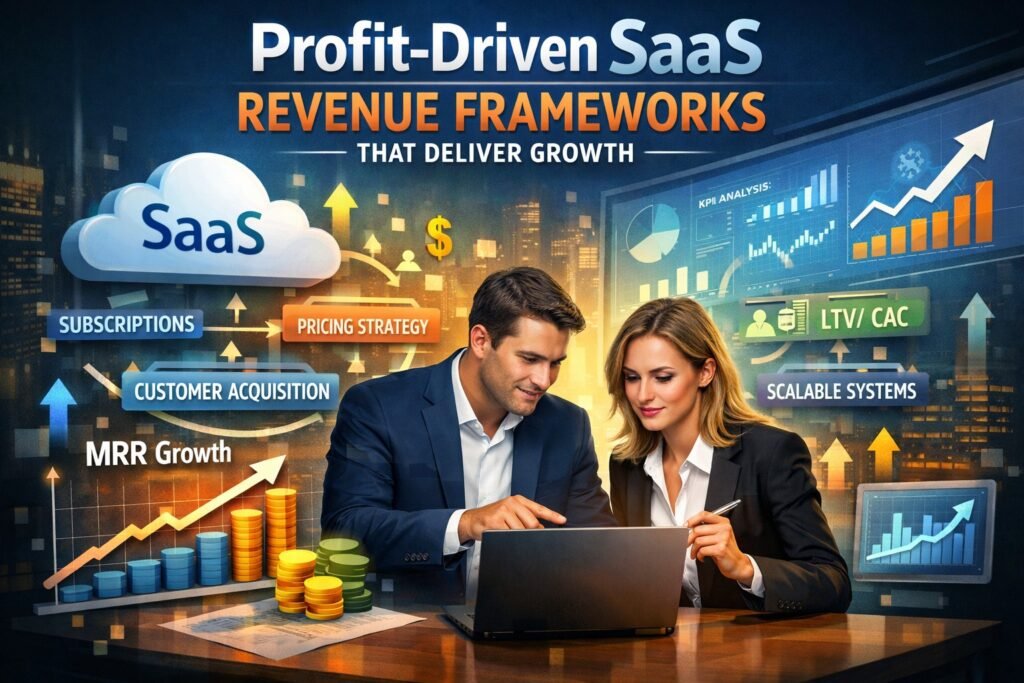
Software as a Service companies are constantly seeking innovative SaaS Revenue Frameworks That Deliver Growth while maintaining profitability. Profit-driven SaaS revenue frameworks are designed not just to boost income but to ensure that growth is sustainable and aligned with long-term business goals. Understanding how these frameworks operate is crucial for organizations aiming to leverage their SaaS offerings effectively. This article explores the key components and strategies essential for building a robust profit-driven SaaS revenue framework that delivers consistent growth. After all, anyone can spend money to buy growth, but the real challenge is building a system that actually pays you back.
Understanding Profit-Driven SaaS Revenue Frameworks Today
Profit-driven SaaS revenue frameworks have evolved significantly over the years, shifting from simple subscription models to more complex, multifaceted approaches. The modern SaaS market demands that organizations not only focus on acquiring customers but also on maximizing the lifetime value of each customer. This requires a deep understanding of the customer journey and the sub-components that influence revenue at each stage, from acquisition and onboarding to retention and upselling. Companies must move beyond traditional revenue metrics and adopt a holistic view that encompasses profitability alongside growth.
Today’s frameworks emphasize the importance of aligning revenue strategies with overall business objectives. Organizations are increasingly recognizing that revenue growth is not solely about increasing sales; it’s also about ensuring that the business operates efficiently. Metrics such as Customer Acquisition Cost (CAC) and Customer Lifetime Value (CLV) are now standard benchmarks that guide strategic decision-making. This approach encourages businesses to focus on sustainable growth, reducing churn, and delivering exceptional customer experiences as integral parts of their revenue strategy.
In the current SaaS landscape, competition is fierce, and differentiation is key. Profit-driven frameworks leverage advanced technologies, including AI and machine learning, to analyze customer behavior and predict trends. By harnessing this data, organizations can create tailored offerings that meet specific customer needs, ultimately driving growth. Companies that effectively implement profit-driven frameworks position themselves for not just immediate gains but for long-term success in a rapidly changing environment.
Key Components of a Successful SaaS Revenue Strategy
A successful SaaS revenue strategy is built on several critical components that work in concert to drive growth and profitability. First and foremost, understanding the target market is essential. SaaS businesses must conduct thorough market research to identify customer needs, preferences, and pain points. This knowledge allows organizations to tailor their offerings and marketing strategies effectively, ensuring they resonate with their audience.
Next, pricing models play a crucial role in revenue generation. Companies can choose from various pricing strategies, including tiered pricing, freemium models, and usage-based pricing, among others. Each model has its advantages and disadvantages, and the choice should align with the company’s goals and customer expectations. For instance, freemium models may attract a larger user base, while tiered pricing can optimize revenue from enterprise customers willing to pay more for additional features.
Finally, effective sales and marketing alignment is vital for driving revenue growth. Marketing teams should focus on generating qualified leads, while sales teams need to convert those leads into customers efficiently. This alignment enables organizations to create a seamless customer journey from lead generation to conversion, enhancing the overall effectiveness of the revenue strategy. Regular communication and collaboration between these teams can lead to greater insights and innovation in approach, ultimately leading to increased revenue.
Aligning Your Business Model with Profit Goals
Aligning a SaaS business model with profit goals involves evaluating and possibly reconfiguring core elements like the value proposition, customer segments, and revenue streams. A strong value proposition is key to attracting and retaining customers, and it should clearly articulate how the SaaS solution addresses specific problems better than competitors. Regularly revisiting and refining this proposition can keep the business aligned with market demands and customer expectations.
Furthermore, customer segmentation plays a pivotal role in aligning business models with profit objectives. Different customer segments may have varying willingness to pay and unique needs. By segmenting customers effectively, organizations can tailor their offerings and pricing strategies to maximize revenue from each segment. For example, enterprise clients may require customized solutions, while small businesses might prefer simple, cost-effective options. This understanding helps in crafting targeted marketing messages and value propositions for each group.
Lastly, diversify revenue streams to enhance profitability. Many successful SaaS companies have adopted a multi-product strategy, offering additional services or products that complement their main offering. This can include add-ons, premium features, or even consulting services. By diversifying, companies can not only increase customer satisfaction but also shield themselves from market fluctuations, ensuring a steady revenue flow over time.
Metrics That Matter: Measuring SaaS Growth Effectively
In the SaaS industry, measuring growth requires a unique set of metrics that comprehensively capture performance. Traditional revenue metrics may not fully encapsulate the nuances of a SaaS business model. Key metrics such as Monthly Recurring Revenue (MRR), Annual Recurring Revenue (ARR), and Average Revenue Per User (ARPU) are essential to understanding revenue streams. These metrics allow organizations to assess their growth trajectory and forecast future performance accurately.
Moreover, customer-centric metrics should not be overlooked. Churn rate, which indicates the percentage of customers who discontinue their subscriptions, is a critical metric for gauging customer satisfaction and retention rates. A high churn rate may signal underlying issues with the product or service, necessitating immediate attention. Additionally, Customer Satisfaction Score (CSAT) and Net Promoter Score (NPS) provide valuable insights into customer sentiment, which can directly correlate with revenue growth.
Integrating these metrics into a comprehensive dashboard enables SaaS organizations to monitor performance in real-time. This data-driven approach facilitates informed decision-making, allowing businesses to pivot strategies quickly in response to market changes. Regularly reviewing these metrics helps identify trends and patterns, empowering organizations to optimize their revenue strategies continually.
Strategies for Enhancing Customer Lifetime Value
Enhancing Customer Lifetime Value (CLV) is crucial for sustaining long-term growth in any SaaS business. CLV represents the total revenue a business can expect from a single customer over the duration of their relationship. To boost this metric, organizations must focus on delivering exceptional customer experiences that encourage loyalty and repeat usage. This can be achieved through personalized onboarding processes that guide new users through the product features and benefits.
Upselling and cross-selling are effective strategies to increase CLV. By identifying opportunities to offer existing customers additional features or services that complement their current subscriptions, companies can maximize revenue without incurring significant customer acquisition costs. Regular communication with customers can also reveal their evolving needs, allowing businesses to tailor their upselling efforts effectively.
Additionally, customer engagement plays a vital role in enhancing CLV. SaaS businesses should leverage various channels, such as email marketing, social media, and webinars, to engage with customers continuously. Providing value through content, tips, and updates will keep the brand top-of-mind and foster a sense of community. Engaged customers are more likely to remain loyal and make additional purchases, thus contributing to a higher CLV.
Leveraging Data Analytics for Revenue Optimization
Data analytics is an indispensable tool for optimizing revenue in SaaS businesses. By employing advanced analytics, organizations can glean insights from vast amounts of customer data, enabling them to make informed decisions about product development, marketing strategies, and customer engagement initiatives. Understanding how customers interact with the service provides the groundwork for improving user experiences and identifying areas for potential growth.
Predictive analytics, in particular, can be incredibly valuable. By analyzing historical data, organizations can forecast future trends, customer behaviors, and even potential churn risks. This foresight allows companies to proactively implement strategies to retain high-risk customers and capitalize on emerging opportunities. For instance, if data indicates that specific customer segments are more likely to churn, targeted outreach efforts can be initiated to address their concerns before they decide to leave.
Additionally, data-driven insights can guide pricing strategies. Organizations can analyze how different pricing models perform across customer segments, helping them fine-tune their approaches. A/B testing various pricing structures can reveal which models yield the highest revenues, allowing companies to adopt strategies that optimize their overall financial performance. In a competitive SaaS landscape, leveraging data analytics is not just beneficial but essential for sustained growth.
Scaling Your SaaS Business: Best Practices to Follow
Scaling a SaaS business presents unique challenges, but with the right strategies in place, organizations can navigate growth successfully. First, investing in robust infrastructure is key. As the customer base grows, SaaS businesses must ensure their technology stack can handle increased demands. Scalable cloud solutions, performance monitoring tools, and efficient customer support systems are foundational elements that enable seamless growth.
Second, maintaining a strong focus on customer feedback is vital during the scaling process. Regularly soliciting input from users can provide valuable insights into product performance and areas for improvement. Organizations should implement feedback loops, such as surveys and user interviews, to gather actionable insights. This data can inform product updates and enhancements, ensuring that the service continues to meet evolving customer needs.
Lastly, building a strong company culture that prioritizes innovation can facilitate scaling efforts. Encouraging team members to contribute ideas and solutions fosters a sense of ownership and engagement, which can lead to creative approaches to challenges. By promoting a culture of continuous improvement and adaptability, organizations can better position themselves to seize opportunities and overcome obstacles as they scale.
Future Trends in SaaS Revenue Frameworks and Growth
As technology continues to evolve, the SaaS landscape will witness significant shifts in revenue frameworks and growth strategies. One emerging trend is the increasing adoption of artificial intelligence (AI) and machine learning (ML) for personalization and automation. These technologies enable SaaS businesses to provide tailored experiences at scale, enhancing customer satisfaction and driving revenue growth. Predictive analytics powered by AI can also lead to more informed decision-making, allowing organizations to anticipate customer needs and respond proactively. Discover SaaS Customer Intelligence Strategies: How to Turn Data into Actionable Insights
Another trend is the rise of subscription-based economies beyond traditional SaaS. Industries such as healthcare, education, and even manufacturing are adopting SaaS models, leading to increased competition and a broader market landscape. SaaS companies must differentiate themselves by demonstrating clear value and building strong customer relationships. Companies that adapt their strategies to cater to these diverse industries will be well-positioned to take advantage of new opportunities.
Finally, sustainability and social responsibility are becoming critical considerations for SaaS companies. Customers are increasingly prioritizing brands that align with their values, prompting organizations to adopt more sustainable practices. This can involve everything from optimizing cloud resources to minimize carbon footprints to implementing socially responsible initiatives within their business models. As these trends continue to shape the SaaS landscape, organizations that embrace innovation and social responsibility will likely experience enhanced growth and customer loyalty.
Conclusion – SaaS Revenue Frameworks That Deliver Growth
profit-driven SaaS revenue frameworks are essential for achieving sustainable growth in a competitive market. By understanding the key components of successful revenue strategies, aligning business models with profit goals, and leveraging data analytics, organizations can optimize their revenue generation efforts. Additionally, focusing on customer lifetime value and adopting best practices for scaling will position companies for future success. As the SaaS landscape evolves, businesses must remain agile and responsive to trends, ensuring they continue to thrive in an ever-changing environment.
Hashtags: #SaaS #RevenueGrowth #DataAnalytics #CustomerExperience #BusinessStrategy
External Source CTA: For more insights on optimizing SaaS revenue, visit SaaStr for expert guidance and resources.