
Customer-Centric SaaS Success Frameworks That Retain Clients
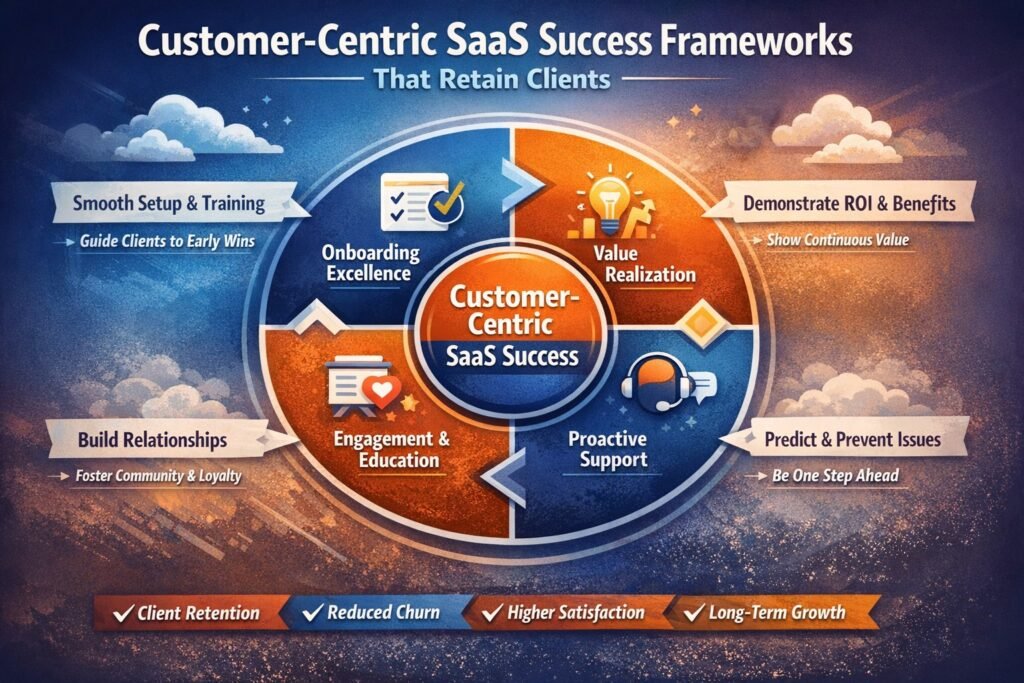
In the competitive landscape of Software as a Service (SaaS), retaining clients is not just beneficial; it is essential for long-term success. A customer-centric approach enables organizations to meet the evolving needs of their clients and cultivate enduring relationships. By implementing effective success frameworks tailored to customer experiences, SaaS companies can significantly enhance client retention.
This article explores Customer-Centric SaaS Success Frameworks, providing insights and actionable strategies for organizations looking to thrive in today’s market. And if you’ve ever watched a customer quietly drift away without saying much, you already know just how critical it is to get this right
Understanding the Importance of Customer-Centric SaaS Models
A customer-centric SaaS model prioritizes the needs and preferences of clients throughout the service delivery process. This approach not only enhances customer satisfaction but also fosters loyalty, transforming clients into brand advocates. When customers feel valued and understood, they are far less likely to switch to competitors. By creating a culture that emphasizes customer appreciation, companies set themselves apart in a crowded marketplace.
Moreover, understanding the customer journey is vital to crafting a compelling SaaS offering. This journey often includes various touchpoints, from initial awareness and onboarding to ongoing support and renewal. Mapping out these stages allows organizations to pinpoint pain points and areas for improvement. By addressing these issues proactively, companies can create an experience that resonates deeply with clients, thereby increasing the chances of retention.
Ultimately, a customer-centric SaaS model is a holistic approach that ties together various elements of business strategy, including product innovation, customer service, and marketing. By aligning all facets of the business toward customer satisfaction, organizations can create a cohesive experience that not only meets but exceeds client expectations.
Key Principles of a Successful Customer-Centric Framework
The foundation of a successful customer-centric framework lies in understanding the customers’ needs, behaviors, and preferences. This requires active listening and engagement across multiple channels. Organizations can employ surveys, interviews, and social media interactions to gather insights that inform product development and service adjustments. This data-driven understanding enables companies to personalize their offerings, leading to better alignment with customer expectations.
Another key principle is fostering a culture of collaboration across departments. When sales, marketing, and customer support teams work in harmony, they can deliver a seamless experience to clients. This requires breaking down silos within the organization, encouraging open communication, and sharing insights gathered from customer interactions. By creating a unified front, companies can respond quickly to customer needs and adapt their strategies accordingly.
Finally, a successful customer-centric framework is one that is dynamic and adaptable. As customer preferences evolve, organizations must be agile enough to pivot their strategies and offerings. Regularly updating service features based on customer feedback and market trends keeps the business relevant and ensures that client retention remains a top priority.
How to Gather Valuable Customer Feedback Effectively
Effective feedback gathering is pivotal for enhancing customer experience. Companies should diversify their feedback methods to reach a broader audience and ensure comprehensive insights. Utilizing online surveys, customer interviews, and feedback forms following key interactions can provide a wealth of information. It’s essential to ask the right questions open-ended inquiries often yield richer qualitative insights than simple yes-or-no questions.
Another effective method is leveraging Net Promoter Score (NPS) surveys, which gauge customer satisfaction and loyalty. By asking clients how likely they are to recommend the service to others, companies can classify them into promoters, passives, and detractors. This categorization helps organizations focus their efforts on improving the experience for detractors while nurturing relationships with promoters.
Incorporating automated feedback tools can further streamline the collection process. For instance, in-app prompts can encourage users to share their thoughts at critical moments, such as after completing a task or experiencing an issue. By creating a culture of feedback, organizations can not only gather valuable insights but also make customers feel valued, thereby increasing their loyalty.
Leveraging Data to Enhance Customer Experience and Retention
In today’s data-driven world, leveraging analytics is crucial for enhancing customer experience. By utilizing customer relationship management (CRM) systems and analytics tools, organizations can track client interactions, preferences, and behaviors over time. This data can uncover trends and patterns that inform strategic decisions regarding product offerings, marketing approaches, and customer service enhancements.
Segmentation is another effective strategy for personalizing customer experiences. By categorizing clients based on behavior, preferences, or demographics, companies can tailor their communications and offerings to meet specific needs. For example, SaaS providers can send targeted messages to specific segments, ensuring that clients receive relevant information that resonates with them personally.
Moreover, predictive analytics can play a vital role in anticipating client needs. By analyzing historical data, organizations can identify potential churn indicators and proactively address them. This might involve reaching out to clients who exhibit signs of disengagement with personalized engagement strategies. By staying ahead of customer needs, companies can significantly boost retention rates and foster long-lasting relationships.
Strategies for Building Strong Customer Relationships in SaaS
Building strong customer relationships begins with effective onboarding. A seamless onboarding experience sets the tone for the entire customer journey. Companies should invest in user-friendly tutorials, comprehensive documentation, and personalized training sessions to ensure clients can effectively utilize the service from day one. This initial investment can significantly impact their long-term satisfaction.
Regular communication is another essential strategy for nurturing relationships. Organizations can implement customer engagement platforms that facilitate ongoing dialogue through newsletters, product updates, and personalized check-ins. By keeping clients informed and engaged, companies demonstrate their commitment to their success, enhancing the overall relationship.
Additionally, fostering a community around the product can enrich customer relationships. Online forums, user groups, and social media channels where customers can connect with one another and share experiences create a sense of belonging. Companies can facilitate this by hosting webinars, Q&A sessions, or industry events, which can provide value while also strengthening customer loyalty.
Implementing Continuous Improvement in Your Service Offering
Continuous improvement should be ingrained in the company culture as a core value. Organizations need to establish a feedback loop wherein customer insights are regularly collected, analyzed, and acted upon. This iterative process ensures that the service remains relevant and valuable to clients, adapting to their changing needs over time.
Investing in employee training also plays a crucial role in continuous improvement. Employees should be empowered with the knowledge and skills needed to enhance customer interactions. By fostering a culture of learning and development, employees can better serve clients, leading to increased satisfaction and retention.
Furthermore, adopting methodologies such as Agile or Lean can enhance service offerings. These frameworks promote flexibility and rapid iteration, allowing companies to implement changes based on customer feedback quickly. By prioritizing adaptability and responsiveness, organizations can ensure their services continually meet customer expectations and preferences.
Measuring Success: Key Metrics for Client Retention
To gauge the effectiveness of customer-centric strategies, organizations must track key retention metrics. Customer Lifetime Value (CLV) is an essential metric that quantifies the total revenue a customer is expected to generate during their relationship with the company. By understanding CLV, organizations can make informed decisions about customer acquisition and retention efforts.
Another vital metric is the Churn Rate, which measures the percentage of customers who discontinue their service over a specific period. Monitoring churn rates helps identify potential issues within the customer experience and informs strategies for improvement. Reducing churn should be a primary focus, as retaining existing clients is often more cost-effective than acquiring new ones.
Finally, tracking customer satisfaction through NPS and Customer Satisfaction Score (CSAT) offers insights into how clients perceive the service. Regularly assessing these metrics enables organizations to identify trends, recognize areas of concern, and implement strategies to enhance retention rates.
Future Trends in Customer-Centric SaaS Practices and Innovations
As the SaaS landscape evolves, several trends are emerging that will shape customer-centric practices. One of the most significant is the integration of artificial intelligence (AI) and machine learning (ML) into service offerings. These technologies can help companies predict customer needs and personalize interactions at scale, leading to more meaningful relationships.
Another trend is the emphasis on omnichannel support. Clients expect to interact with organizations through various channels, including chat, email, and social media. Companies that adopt an omnichannel approach can provide a seamless experience, allowing customers to switch between channels without losing context. This adaptability enhances customer satisfaction and retention.
Lastly, the rise of subscription-based models is reshaping the SaaS landscape. Customers are increasingly looking for flexibility and value in their subscriptions. Offering tailored subscription plans that cater to different customer segments can lead to higher satisfaction and loyalty. As companies continue to innovate, maintaining a customer-centric focus will be essential for long-term success.
Conclusion – Customer-Centric SaaS Success Frameworks That Retain Clients
A customer-centric SaaS success framework is not just a strategy but a holistic approach to business that emphasizes long-term client relationships. By understanding the importance of customer needs, implementing effective feedback mechanisms, leveraging data, and continuously improving services, companies can significantly enhance customer retention.
As the market continues to evolve, staying ahead of trends and investing in customer relationships will be key to thriving in the competitive SaaS landscape. For further insights on customer-centric SaaS strategies, visit Jun
Hashtags: #SaaS #CustomerRetention #CustomerExperience #DataAnalytics #ContinuousImprovement