
SaaS Growth Metrics That Every Founder Must Track
As a founder in the SaaS industry, tracking SaaS growth metrics is vital for making informed decisions and steering your company toward success. Understanding the specific metrics that matter will not only help you to gauge your company’s performance but also provide insights into potential areas for improvement. In this article, we will explore essential SaaS growth metrics every founder should track, giving you the tools to measure success effectively and implement strategic actions for sustained growth.
Understanding the Importance of SaaS Growth Metrics
SaaS growth metrics play a crucial role in understanding the health and sustainability of your business model. The subscription-based revenue structure of SaaS companies requires a different approach to tracking performance compared to traditional business models. Metrics provide valuable insights into customer behavior, financial health, and operational efficiency. Monitoring these figures allows founders to make data-driven decisions, identify trends, and pinpoint areas needing improvement.
In the fast-paced SaaS landscape, founders can quickly lose sight of their company’s trajectory if they do not monitor the right metrics. Growth metrics illuminate the path forward, helping founders prioritize investments and resources. For example, knowing your customer acquisition cost (CAC) can influence your marketing budget, ensuring you are not overspending on customer acquisition without a return on investment.
Furthermore, metrics enable founders to communicate effectively with stakeholders. Investors, partners, and team members often seek performance data to evaluate the viability of the business model. Presenting well-analyzed metrics can instill confidence and foster collaboration among stakeholders, which is essential for growth in a competitive environment.
Key Performance Indicators Every Founder Should Know
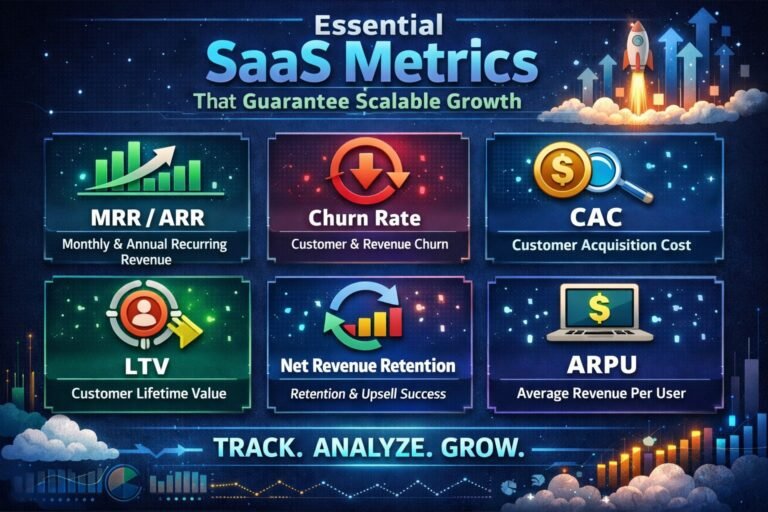
When it comes to SaaS metrics, Key Performance Indicators (KPIs) stand out as the most critical figures to track. These KPIs serve as benchmarks for gauging success and identifying areas for enhancement. Notable among these are Monthly Recurring Revenue (MRR), Customer Acquisition Cost (CAC), and Customer Lifetime Value (CLV). While each metric has its distinct role, together they form a comprehensive picture of business health.
Understanding MRR is foundational for any SaaS business. It provides insight into predictable revenue, allowing founders to forecast growth and make informed financial planning decisions. In contrast, knowing the CAC helps assess the effectiveness of marketing strategies. A high CAC can indicate inefficiencies in your sales process or the need to refine your marketing approach.
Another crucial KPI is the Customer Lifetime Value (CLV), which helps to estimate the total revenue a customer will generate during their relationship with your company. Together, these KPIs offer a multi-dimensional view of your business, empowering founders to strategize for both immediate and long-term growth.
Monthly Recurring Revenue: The Heartbeat of SaaS
Monthly Recurring Revenue (MRR) is often viewed as the heartbeat of any SaaS operation. It provides a consistent and predictable revenue stream, enabling founders to assess their business’s financial stability. MRR is calculated by multiplying the number of active subscribers by the average revenue per user (ARPU). This straightforward formula allows for easy tracking and forecasting, giving founders a clear view of revenue fluctuations.
Monitoring MRR over time can reveal important trends, such as seasonal fluctuations, customer churn, or growth spikes. For instance, if you notice a steady increase in MRR, it indicates that your customer base is expanding, which is a positive sign for future growth. On the other hand, a drop in MRR may necessitate an immediate review of customer retention strategies or product offerings.
Moreover, MRR serves as a benchmark for making strategic decisions, such as budgeting for new hires or allocating resources for marketing campaigns. By establishing MRR targets, founders can ensure that their strategies align with their growth objectives, ultimately contributing to a healthier and more sustainable business.
Customer Acquisition Cost and Its Impact on Growth
Customer Acquisition Cost (CAC) is another vital metric that SaaS founders should keep a close eye on. CAC is the total cost of acquiring a new customer, encompassing marketing expenses, sales team salaries, and any other investments made in attracting customers. Understanding this metric is essential, as a high CAC can quickly erode profit margins.
Analyzing CAC in relation to CLV provides a clearer picture of your business’s health. If your CAC is significantly higher than your CLV, it’s a red flag that requires immediate attention. This imbalance indicates that you’re spending too much to acquire customers compared to what they are worth over their lifetime. By optimizing your sales and marketing strategies, reducing operating costs, or enhancing your product’s value proposition, you can improve this ratio and fuel growth.
Additionally, tracking CAC over time can reveal the effectiveness of different marketing channels. By identifying which channels yield the best return on investment, founders can focus their efforts on strategies that drive profitable customer acquisition, ultimately leading to more sustainable growth.
Churn Rate: Why It Matters and How to Reduce It
Churn rate is a critical metric for SaaS founders, as it represents the percentage of customers who discontinue their subscription over a given period. A high churn rate can significantly impact revenue, making it vital to understand the reasons behind it and take proactive measures to reduce it. Founders should aim to monitor churn closely, as retaining existing customers is often more cost-effective than acquiring new ones.
Understanding the factors contributing to churn can help you develop targeted retention strategies. Common reasons for customer loss include dissatisfaction with the product, inadequate customer support, or a lack of perceived value. Conducting exit interviews or surveys can provide valuable insights into customer pain points, enabling founders to make informed changes to improve retention.
Additionally, implementing a customer engagement strategy can help reduce churn rates. Regular check-ins, personalized communication, and proactive customer support can create a sense of loyalty among users. By fostering strong relationships with customers, founders can not only reduce churn but also turn satisfied customers into brand advocates, further driving growth.
Lifetime Value: Measuring Customer Profitability
Customer Lifetime Value (CLV) quantifies the total revenue expected from a customer over their entire relationship with your business. This metric helps founders assess the long-term profitability of acquiring new customers. Understanding CLV is essential for determining how much you can afford to spend on customer acquisition while still maintaining a profit margin.
To calculate CLV, one can use the formula: CLV = Average Revenue Per User (ARPU) multiplied by the average customer lifespan. By knowing the CLV, founders can make data-driven decisions regarding marketing budgets, resource allocation, and sales strategies. If the CLV is significantly higher than CAC, it indicates a sustainable business model that can grow organically.
Moreover, tracking CLV over time can reveal insights into customer behavior and purchasing patterns. For example, if CLV is increasing, it may suggest that your product or service is becoming more valuable to customers, or that your upsell and cross-sell strategies are effective. By focusing on enhancing CLV, founders can drive sustainable growth while ensuring profitability.
Conversion Rates: Turning Leads into Paying Customers
Conversion rates are another essential SaaS growth metric to track. This metric measures the percentage of leads that become paying customers after engaging with your marketing efforts. A high conversion rate signifies that your sales process is effective, while a low rate may indicate the need for adjustments in your approach.
To improve conversion rates, founders should analyze each stage of the sales funnel. Identifying where potential customers drop off can provide insights into the factors affecting their decision-making. Whether it’s a complicated onboarding process or unclear value propositions, addressing these pain points can lead to significant improvements in conversion rates.
Additionally, A/B testing various aspects of your marketing strategy can help optimize conversion rates. Experimenting with different messaging, landing pages, or calls-to-action can yield valuable data that informs future strategies. By focusing on conversion rates, founders can ensure that their marketing and sales efforts translate into actual revenue.
Setting Goals: How to Use Metrics for Strategic Planning
Setting clear, measurable goals is essential for SaaS founders looking to leverage growth metrics effectively. By aligning metrics with business objectives, founders can create actionable plans that drive results. Whether it’s increasing MRR by a specific percentage or reducing churn rates, having defined targets allows for focused efforts and accountability.
Using metrics for strategic planning also enables founders to evaluate progress periodically. Regularly reviewing performance against established goals helps to identify areas of success and those requiring adjustment. This ongoing assessment fosters a culture of continuous improvement, encouraging teams to stay aligned with the company’s growth strategies.
Moreover, sharing these goals and metrics with the entire team promotes transparency and collective responsibility. When employees understand how their individual contributions impact overall business performance, it can foster motivation and alignment. By leveraging metrics for goal-setting, SaaS founders can create a more focused, driven, and successful organization.
In conclusion, tracking the right SaaS growth metrics is essential for founders aiming to navigate the complexities of the software landscape. By understanding key metrics such as MRR, CAC, churn rate, CLV, and conversion rates, you can make informed decisions that propel your business forward. Setting clear goals based on these metrics will foster a culture of accountability and continuous improvement, ensuring your SaaS company thrives in a competitive market. For further reading on this subject, check out SaaS Growth Metrics on SaaStr.
Meta Description: Discover essential SaaS growth metrics every founder must track for effective decision-making and sustainable growth.
Tags: SaaS, Metrics, Growth, Founders, Business Strategy, Performance Indicators, Customer Retention, Revenue, KPIs, Strategic Planning
Hashtags: #SaaS #GrowthMetrics #BusinessStrategy #CustomerSuccess #FoundersGuide