Performance-Led SaaS Marketing Strategies for Scalable Growth and Measurable Results
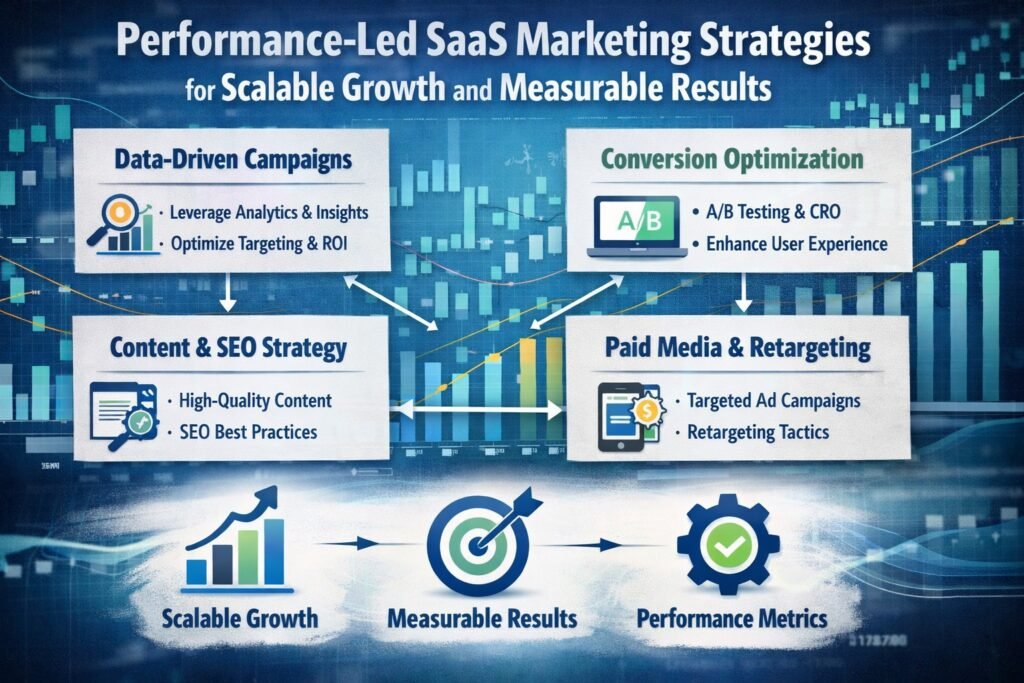
SaaS companies are operating in a digital space that’s constantly changing, where standing out and scaling efficiently isn’t easy. In this environment, effective SaaS marketing strategies go beyond visibility they focus on performance, precision, and measurable impact. That’s where performance-led marketing comes in, giving teams a structured, data-driven way to grow efficiently while staying aligned with business goals. In this article, we’ll break down the core elements of performance-led marketing for SaaS, including key metrics, data-driven frameworks, customer insights, lead generation strategies, automation, sales alignment, and real-world examples that bring it all together. Because in SaaS, it’s not just about working harder it’s about working smarter
Unpacking Performance-Led Marketing for SaaS Companies
Performance-led marketing emphasizes measurable outcomes over traditional branding efforts. For SaaS companies, this approach means focusing on key performance indicators (KPIs) that directly correlate with customer acquisition, retention, and revenue growth. Unlike conventional marketing strategies, which may prioritize brand awareness, performance-led marketing shifts the focus to actionable results. This methodology is particularly beneficial in the SaaS sector, where the customer journey can be complex and requires continuous optimization.
To implement performance-led marketing, SaaS companies must first define their goals and the metrics that will measure success. Common KPIs include customer acquisition cost (CAC), lifetime value (LTV), and churn rate. By establishing baseline metrics, organizations can set realistic targets and track progress over time. This data-driven approach allows for agile marketing practices, enabling teams to pivot quickly based on performance insights.
Performance-led marketing also encourages cross-functional collaboration. Marketing, sales, and customer support teams must work together to ensure a unified approach to achieving business objectives. This alignment creates a more cohesive customer experience, fostering trust and loyalty. As a result, performance-led marketing can transform SaaS companies into data-driven organizations that continuously adapt to market trends and customer needs.
Key Metrics to Measure Success in SaaS Marketing
To effectively drive performance-led marketing, it is crucial for SaaS companies to identify and track the right metrics. Metrics should not only reflect marketing effectiveness but also provide insights into customer behavior and preferences. Key performance indicators such as CAC, LTV, and conversion rates are foundational elements that should be monitored consistently.
CAC measures the total cost of acquiring a new customer, encompassing marketing expenses, sales efforts, and onboarding costs. It is vital to keep CAC low while maximizing LTV, which quantifies the revenue generated from a customer over their lifetime. A strong LTV-to-CAC ratio, typically greater than 3:1, indicates a sustainable business model and healthy profitability. Tracking this metric ensures that marketing efforts are yielding a positive return on investment.
In addition to these metrics, SaaS companies should also consider measuring user engagement metrics like Monthly Recurring Revenue (MRR), Net Promoter Score (NPS), and customer satisfaction scores (CSAT). These metrics offer insights into user experience and product adoption, helping businesses fine-tune their offerings and marketing strategies accordingly. By focusing on these key metrics, SaaS companies can align their marketing efforts with overall business goals, leading to enhanced growth and customer satisfaction.
Building a Data-Driven Marketing Framework for Growth
Establishing a data-driven marketing framework is essential for SaaS companies aiming for scalable growth. This framework should integrate technology, analytics, and strategic planning, allowing organizations to harness data effectively. By leveraging advanced analytics tools, companies can gain insights into customer behavior, engagement patterns, and market trends.
To build this framework, SaaS organizations must prioritize data collection and management. Utilizing Customer Relationship Management (CRM) systems and marketing automation platforms can streamline data capture and ensure that information is centralized and accessible. This enables teams to analyze data in real-time and make informed decisions based on empirical evidence.
Moreover, creating a culture of continuous improvement is vital for a data-driven marketing framework. Regularly reviewing performance metrics, A/B testing marketing campaigns, and soliciting customer feedback can foster innovation and agility. This iterative approach allows SaaS marketers to adapt quickly to changing market dynamics, optimizing their strategies for maximum impact while staying aligned with customer needs and preferences.
Leveraging Customer Insights for Strategic Messaging
Understanding customer needs and pain points is critical for developing effective marketing messages. By leveraging customer insights, SaaS companies can tailor their messaging to resonate with target audiences, ultimately driving engagement and conversions. Customer insights can be gathered through surveys, interviews, and analyzing user behavior on digital platforms.
Segmentation is key to effective messaging. By categorizing customers based on demographics, purchasing behavior, or product usage, companies can develop personalized marketing campaigns that speak directly to each segment’s unique challenges and goals. This approach not only enhances engagement but also fosters a sense of familiarity and trust with potential customers.
It’s also essential to integrate customer testimonials and case studies into marketing materials. These real-world examples can serve as powerful proof points that validate the effectiveness of the SaaS solution. By showcasing how the product solves specific problems for customers, SaaS companies can establish credibility and drive interest among prospects looking for proven solutions.
Effective Lead Generation Techniques for SaaS Brands
Lead generation is a crucial aspect of SaaS marketing strategies, as acquiring new customers directly impacts revenue growth. Several effective techniques can be leveraged to attract potential customers and convert leads into paying clients. Content marketing remains one of the most potent tools in generating leads for SaaS brands.
Creating high-quality, informative content such as blog posts, whitepapers, and webinars positions the company as an authority in its niche. By addressing industry pain points and sharing valuable insights, SaaS companies can attract and engage their target audience. Providing gated content in exchange for contact information can turn website visitors into qualified leads, allowing for more targeted follow-up efforts.
Additionally, leveraging social media platforms can significantly enhance lead generation efforts. By creating engaging posts that highlight customer success stories, product updates, and industry trends, SaaS brands can expand their reach and drive traffic to their websites. Running targeted ads on platforms like LinkedIn and Facebook can further refine audience targeting and increase lead generation effectiveness, maximizing marketing ROI.
Scaling Marketing Efforts with Automation Tools
Marketing automation tools are essential for scaling SaaS marketing efforts efficiently. These tools streamline repetitive tasks, enhance workflow, and improve overall productivity, allowing marketing teams to focus on strategic initiatives. By automating processes such as email marketing, lead scoring, and social media posting, SaaS companies can maintain consistent engagement with their audience while reducing manual effort.
One of the key benefits of marketing automation is the ability to nurture leads through personalized email campaigns. By segmenting leads based on their behavior and interests, companies can send tailored content that guides prospects through the sales funnel. This targeted approach can significantly improve conversion rates and reduce dropout rates, as prospects receive relevant information that addresses their specific needs.
Furthermore, automation tools can provide valuable analytics and reporting features. By tracking campaign performance, engagement metrics, and conversion rates, marketing teams can make data-driven adjustments to their strategies. This responsiveness empowers SaaS companies to optimize their marketing efforts continuously, ensuring that they are not only growing but doing so sustainably and effectively.
Integrating Sales and Marketing for Cohesive Strategies
Integrating sales and marketing efforts is a game-changer for SaaS companies aiming for scalability. A cohesive strategy ensures that both teams are aligned with common goals, leading to a more streamlined customer acquisition process. Open communication between sales and marketing teams can enhance lead quality and improve overall conversion rates.
To achieve this integration, SaaS companies should establish shared metrics and objectives that both teams can work towards. Collaborating on lead definitions, targeting criteria, and follow-up processes can create a seamless handoff between marketing and sales. Regularly scheduled meetings and joint training sessions can foster a strong working relationship, ensuring that both teams support one another in achieving business goals.
Additionally, utilizing shared tools and platforms can streamline communication and collaboration. A centralized CRM system can provide visibility into the entire customer journey, allowing both teams to track lead progress and adjust strategies as necessary. This integrated approach not only enhances efficiency but also ensures a unified customer experience, contributing to higher satisfaction and long-term retention.
Case Studies: Successful SaaS Marketing Transformations
Examining successful case studies can provide valuable insights into effective performance-led SaaS marketing strategies. For instance, a popular project management tool leveraged data-driven marketing to significantly increase its customer base. By implementing a robust analytics platform, the company identified key user engagement metrics and optimized its onboarding process, resulting in a 30% reduction in churn rate and a 25% increase in customer lifetime value.
Another notable example involved a SaaS company specializing in CRM solutions that adopted a content marketing strategy. By creating a series of informative blog posts and webinars, the organization positioned itself as an industry expert while generating leads through gated content. This approach led to a 40% increase in qualified leads within six months, allowing the company to scale its marketing efforts effectively.
These case studies highlight the importance of a performance-led marketing approach, emphasizing metrics, customer insights, and integrated strategies. By learning from these examples, SaaS companies can craft their marketing initiatives to achieve similar transformations and drive sustainable growth. Explore SaaS Customer Intelligence Strategies How to Turn Data into Actionable Insights
Implementing performance-led marketing strategies can transform how SaaS companies approach their marketing efforts. By focusing on key metrics, leveraging customer insights, and utilizing automation tools, organizations can achieve scalable growth and drive significant business results. As the SaaS landscape continues to evolve, companies that prioritize data-driven decision-making will be well-positioned to thrive in an increasingly competitive market.
Meta Description: Discover performance-led SaaS marketing strategies that drive scalable growth and measurable results for sustainable success.
Hashtags: #SaaS #MarketingStrategies #DataDriven #LeadGeneration #Growth
Call-to-Action: For more insights on SaaS marketing, visit HubSpot at https://www.hubspot.com/marketing-statistics.