Data-Driven SaaS Growth Hacks You Can’t Ignore
Data-driven strategies are essential for any SaaS business looking to scale and thrive in a competitive marketplace. This blog explores various growth hacks that leverage data to optimize operations, improve customer engagement, and drive revenue. By understanding key metrics, utilizing customer feedback, and embracing innovative technologies, organizations can position themselves for sustainable growth and success. Let’s delve into the powerful strategies that are transforming the SaaS landscape.
Unleashing the Power of Data for SaaS Growth Strategies
In the rapidly evolving SaaS environment, data has become the backbone of effective growth strategies. Companies are increasingly recognizing that traditional marketing tactics are no longer sufficient to capture and retain customers. By leveraging data analytics, SaaS businesses can gain invaluable insights into customer behavior, preferences, and pain points. This allows for more focused marketing efforts, ultimately leading to higher conversion rates and improved customer satisfaction.
To effectively harness the power of data, organizations should invest in robust analytics tools and platforms. These tools not only help track performance metrics but also facilitate real-time decision-making. For instance, using tools like Google Analytics or Mixpanel enables enterprises to monitor user engagement, identify trends, and adjust strategies accordingly. This data-centric approach fosters agility, allowing companies to pivot quickly in response to market changes or emerging opportunities.
Additionally, a data-driven mindset encourages collaboration between different departments. Sales, marketing, and product teams can work in unison, sharing insights and strategies that are informed by data. This interdepartmental synergy is crucial for aligning goals and enhancing overall business performance, ultimately resulting in a more cohesive and effective growth strategy.
Understanding Key Metrics That Drive SaaS Success
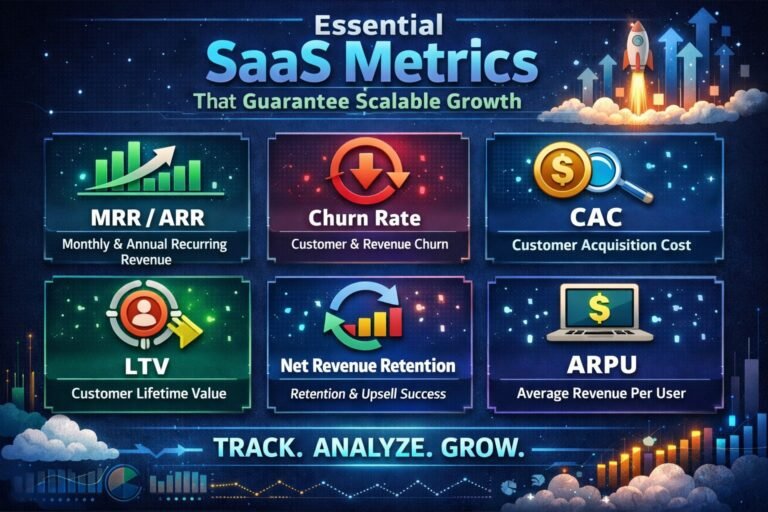
In the SaaS industry, understanding key performance metrics is critical to tracking success and identifying areas for growth. Metrics such as Monthly Recurring Revenue (MRR), Customer Acquisition Cost (CAC), and Customer Lifetime Value (CLV) provide essential insights into the health of the business. For example, a low CAC paired with a high CLV indicates that a company is acquiring customers efficiently while retaining them over the long term, which is vital for sustainability.
Regularly monitoring these metrics allows SaaS organizations to make informed decisions about where to allocate resources. For instance, investing in marketing channels that yield a high return on investment, as indicated by data analytics, can amplify growth. Furthermore, understanding churn rates and what drives customer attrition can help businesses implement retention strategies that enhance loyalty and reduce turnover.
Moreover, benchmarking these key metrics against industry standards offers another layer of analysis. This comparative approach helps SaaS companies identify gaps in performance and adopt best practices from market leaders. By aligning with industry benchmarks, organizations can set realistic growth objectives and track progress toward achieving them.
Leveraging Customer Feedback for Continuous Improvement
Customer feedback is a goldmine of insights that can significantly bolster SaaS growth. Actively seeking and analyzing user feedback allows organizations to understand pain points and areas for product improvement. This information can be gathered through various channels, such as surveys, user interviews, and customer support interactions, enabling companies to tailor their offerings to better meet user needs.
Implementing a feedback loop is essential for continuous improvement. By systematically collecting feedback, businesses can prioritize product updates and feature enhancements that resonate with users. For instance, if a significant number of customers express frustration with a specific feature, addressing that issue promptly can lead to increased user satisfaction and retention rates.
Furthermore, leveraging customer feedback to inform marketing strategies can enhance engagement and conversion rates. Understanding how customers perceive your product and what they find valuable can help craft targeted marketing messages that resonate with your audience. This customer-centric approach not only fosters loyalty but also attracts new users through positive word-of-mouth referrals.
Utilizing A/B Testing to Optimize User Experience
A/B testing is a powerful tool for optimizing user experience in the SaaS industry. By comparing two different versions of a webpage, email, or feature, organizations can determine which variation yields better results. This data-driven approach allows companies to make informed decisions based on user behavior rather than assumptions, ultimately leading to improved conversion rates and customer engagement.
To conduct effective A/B tests, it is crucial to define clear objectives and metrics beforehand. For example, if the goal is to increase sign-ups, metrics such as click-through rates and conversion rates should be monitored closely. Analyzing the results will help teams understand user preferences and inform future design or feature decisions.
In addition to enhancing user experience, A/B testing fosters a culture of experimentation within the organization. Encouraging teams to test hypotheses and learn from results cultivates an environment of continuous learning and improvement. This agility is vital in the competitive SaaS landscape, where user preferences can shift rapidly.
Implementing Automation for Enhanced Operational Efficiency
Automation is a game-changer for SaaS businesses aiming to enhance operational efficiency. By automating repetitive tasks such as lead nurturing, customer onboarding, and billing processes, organizations can free up valuable resources and allow teams to focus on strategic initiatives. This not only streamlines operations but also significantly reduces the risk of human error.
Utilizing tools like Zapier, HubSpot, or Salesforce can help integrate various functions across the organization. For instance, automating email campaigns based on user behavior can improve engagement rates and streamline communication. This efficiency not only enhances customer experiences but also contributes to the overall scalability of the business.
Moreover, analytics-driven automation allows companies to track performance and optimize processes continually. By analyzing data on task completion times and customer interactions, organizations can identify bottlenecks and areas for improvement, ensuring that operations run smoothly and efficiently.
Personalization Techniques That Boost Customer Engagement
Personalization is no longer a luxury; it is a necessity in the SaaS industry. By tailoring experiences to individual users based on historical data and preferences, organizations can significantly enhance customer engagement. Personalization techniques, such as targeted content recommendations, customized onboarding, and personalized communication, can lead to deeper user relationships and higher retention rates.
Leveraging data analytics is key to implementing effective personalization strategies. By analyzing user behavior and preferences, SaaS businesses can create tailored experiences that resonate with their audience. For example, recommending features or content based on a user’s previous interactions can increase engagement and enhance the overall user experience.
Furthermore, successful personalization requires a robust CRM system that centralizes user data. By maintaining a comprehensive understanding of customer profiles and histories, organizations can better serve their users and anticipate their needs. This proactive approach not only improves customer satisfaction but also drives loyalty and advocacy.
Exploring Predictive Analytics for Future Growth Insights
Predictive analytics is transforming the way SaaS organizations approach growth strategies. By utilizing historical data and applying statistical algorithms, businesses can forecast future trends and make data-driven decisions. This forward-looking perspective enables organizations to identify opportunities, mitigate risks, and allocate resources more effectively.
For example, predictive analytics can help identify which customers are at risk of churning based on their engagement metrics. By proactively addressing these customers through targeted retention strategies, organizations can reduce turnover and maintain a stable revenue stream. This proactive approach is essential for long-term success in a competitive environment.
Moreover, predictive analytics can inform product development strategies. By analyzing user data, organizations can anticipate market trends and adapt their offerings accordingly. This foresight not only enhances customer satisfaction but also positions SaaS companies as leaders in their respective markets.
Building a Data-Centric Culture Within Your Organization
Creating a data-centric culture is essential for the long-term success of any SaaS organization. This involves fostering an environment where data-driven decision-making is prioritized at all levels of the business. By equipping teams with the tools and resources they need to access and analyze data, organizations can ensure that everyone is aligned with the company’s growth objectives.
Training and education are critical components of building a data-centric culture. Providing teams with the skills they need to interpret and utilize data effectively can lead to innovative solutions and enhanced performance. Regular workshops and training sessions can empower employees to take ownership of their roles in driving growth through data.
Additionally, leadership plays a vital role in establishing a data-driven mindset. By setting clear expectations around data usage and celebrating data-driven successes, leaders can encourage a culture of accountability and continuous improvement. This cultural shift not only improves operational efficiency but also fuels innovation and competitive advantage in the market.
In conclusion, data-driven growth hacks are indispensable for any SaaS organization seeking to thrive in today’s competitive landscape. By understanding key metrics, leveraging customer feedback, and embracing technologies like predictive analytics and automation, companies can position themselves for sustainable success. Building a data-centric culture ensures that these strategies are continuously refined and optimized, fostering an environment of growth and innovation.
Meta Description: Discover essential data-driven growth hacks for SaaS organizations, from key metrics to customer feedback and predictive analytics, to optimize success.
Tags: SaaS growth, data-driven strategies, predictive analytics, customer engagement, A/B testing, operational efficiency, personalization, customer feedback, metrics, automation
Hashtags: #SaaS #GrowthHacks #DataDriven #CustomerEngagement #PredictiveAnalytics