
Mastering SaaS Revenue Forecasting: Your Essential Guide and Template
Revenue forecasting remains a pivotal component for any Software as a Service (SaaS) business. Accurate forecasting enables companies to make informed decisions about budgeting, resource allocation, and strategic direction. This article serves as your essential guide to mastering SaaS revenue forecasting. We’ll explore effective strategies and provide a comprehensive template designed to enhance your forecasting accuracy. Whether you’re a seasoned executive or a new entrepreneur, understanding how to predict revenue can significantly impact your company’s growth trajectory.
Essential Strategies for Accurate SaaS Revenue Forecasting
Understand Your Metrics
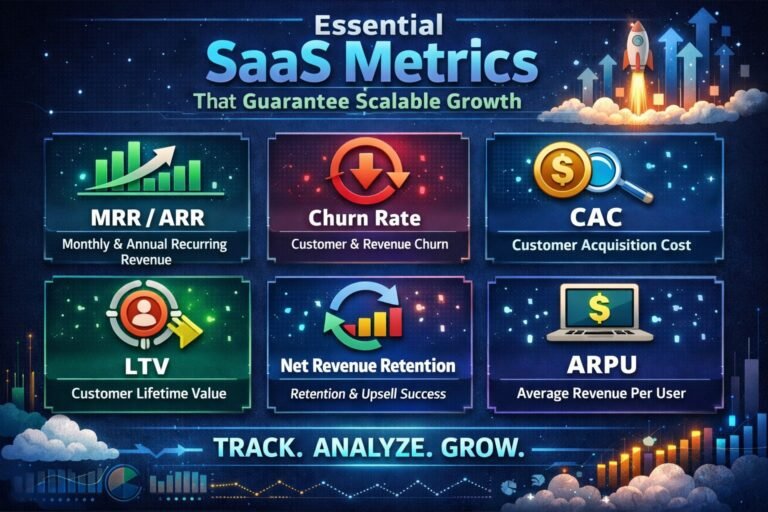
The first step in accurate SaaS revenue forecasting is to understand the key metrics that drive your business. Metrics such as Monthly Recurring Revenue (MRR), Customer Acquisition Cost (CAC), and Customer Lifetime Value (CLV) are vital.
MRR is the total revenue generated from subscriptions in a month. This metric helps you predict future revenue based on existing customers.
Tracking CAC allows you to assess how much you spend to acquire a customer. Understanding this helps in balancing marketing spend with revenue growth.
Lastly, CLV estimates the total revenue a customer will generate during their relationship with your company. Knowing your CLV can inform how much you should invest in acquiring new customers.
Create a Predictive Model
Once you have a firm grasp on your key metrics, developing a predictive model is essential. This model should incorporate historical data and use it to project future revenue.
A common approach is to apply a time series model. This involves analyzing past data trends to forecast future revenue. Regularly updating this model with new data can improve accuracy over time.
Incorporate seasonality into your model if your business experiences seasonal fluctuations. Recognizing these patterns helps refine your forecasts and prepares your organization for dips or spikes in revenue.
Regular Updates
Your SaaS revenue forecast should not be a one-time effort. Regular updates based on new data and market conditions are vital.
Establish a routine for reviewing your forecasts. Monthly or quarterly updates allow for adjustments based on customer behavior, economic changes, or competitive actions.
Encourage a culture of transparency among teams. Share forecasts widely within the organization, and solicit feedback to ensure all departments align with revenue goals.
A Comprehensive Template to Boost Your Forecasting Accuracy
Template Overview
A solid revenue forecasting template can streamline the process and enhance accuracy. Your template should include essential components like customer segments, pricing tiers, and growth assumptions.
Customer Segments help you identify which groups contribute most to revenue. This segmentation allows for more tailored marketing strategies.
Pricing Tiers should incorporate various subscription levels. Understanding how many customers are in each tier can provide insights into potential revenue growth.
Lastly, include Growth Assumptions that reflect market trends and internal capacity for expansion. This will offer a realistic outlook on revenue projections.
Key Components of the Template
The template should start with a revenue summary section. This section outlines total MRR, key metrics, and growth rates. Use charts or graphs for visual impact.
Next, incorporate a detailed breakdown of revenue sources. Outline individual customer accounts, pricing models, and renewal rates. This granular view aids in identifying trends and areas for improvement.
Finally, integrate a forecast section. This should present anticipated revenues for the coming months and years, based on the assumptions you’ve outlined. Use different scenarios, like best-case and worst-case, to prepare for uncertainties.
Implementing the Template
Once your template is created, it’s time for implementation. Start by inputting historical data to inform your projections.
Assign team members to monitor specific metrics. This accountability ensures that each aspect of the forecast receives adequate attention.
Regularly revisit the template for updates. New customer data, pricing changes, or market conditions should prompt revisions to keep projections relevant and accurate.
Strategic Framework for Enhancing Forecast Accuracy
The Governance and Alignment Framework
To ensure that your revenue forecasting is not just accurate but also actionable, consider implementing a Governance and Alignment Framework. This framework focuses on cross-functional collaboration, ensuring every department is aligned with revenue goals.
Create a Steering Committee comprising leaders from finance, marketing, sales, and operations. This committee should meet regularly to discuss revenue forecasts and their implications for each department.
Establish Key Performance Indicators (KPIs) that align with your revenue goals. These KPIs should be tracked by each department, ensuring accountability and transparency.
Implementation Checklist
- Set Up Metrics: Identify and define the key metrics for your business.
- Develop a Predictive Model: Create a time-series model using historical data.
- Create a Forecasting Template: Build a comprehensive template that includes all critical components.
- Assign Responsibilities: Delegate ownership of specific metrics to team members.
- Establish Governance: Form a steering committee for cross-department alignment.
- Regular Reviews: Schedule monthly or quarterly reviews to update forecasts.
- Communicate Findings: Share insights and forecasts across the organization.
Executive FAQ
What is the impact on Total Cost of Ownership (TCO)?
Understanding the TCO is crucial. It helps gauge the long-term costs associated with deploying your SaaS solution. Accurate revenue forecasting can help in budgeting for both direct and indirect costs. This, in turn, aids in pricing strategies and ROI calculations.
How does forecasting affect Customer Retention Rate (NRR)?
Forecasting plays a significant role in assessing NRR. By predicting churn rates accurately, you can allocate resources effectively. A proactive approach to retention can improve overall profitability and strengthen customer relationships.
What is the importance of Security Governance in forecasting?
Security governance is essential in managing risks that can impact revenue. Accurate forecasts allow for identifying areas where investment in security is needed. This investment can protect against data breaches and maintain customer trust.
How does legacy integration affect forecasting?
Legacy systems can complicate forecasting efforts. If your data is fragmented across multiple systems, your revenue projections may lack accuracy. Integrating these systems can provide a holistic view, enabling more effective forecasting.
What role does market analysis play in forecasting?
Market analysis provides insights into competitor performance and market trends. Incorporating this information into your forecasts allows for more accurate projections. Understanding where the market is heading can help refine your growth assumptions.
How can we ensure cross-functional alignment in forecasting?
Cross-functional alignment requires consistent communication and shared objectives. Regular meetings and updates from the steering committee can help keep all departments on the same page. This alignment ensures that everyone is working toward the same revenue goals.
How do we handle unexpected market fluctuations?
Unexpected market fluctuations can disrupt revenue forecasts. Establish contingency plans within your forecasting model. Consider best-case and worst-case scenarios to prepare for various outcomes. Regular updates based on real-time data can also mitigate risks.
What metrics should we focus on for growth?
Focus on metrics that directly impact revenue and customer engagement. Key metrics include MRR, CLV, CAC, and churn rates. Keeping an eye on these metrics allows for better strategic decisions and growth planning.
Mastering SaaS revenue forecasting isn’t just a technical task; it’s a strategic imperative. By employing effective methodologies and leveraging a robust template, you can greatly enhance your forecasting accuracy. Remember to regularly review and adjust your forecasts to reflect the current business environment. By ensuring that your organization aligns around these forecasts, you position your SaaS company for sustainable growth and profitability.