Pillar Page 5: Infrastructure & Security – The Enterprise Cloud Infrastructure Manual
1. Executive Overview: Infrastructure & Security, Compliant Software Backends
In the contemporary enterprise landscape, the backend architecture of a Software-as-a-Service (SaaS) platform is no longer insulated from corporate commercial realities. Infrastructure choices directly dictate a technology company’s gross margins, system uptime, and enterprise valuation. A brittle, unoptimized cloud setup or a casual approach to customer data security represents an existential risk to software operations. Scaling a B2B platform safely into the enterprise sector requires a disciplined approach to systems engineering, data protection, and continuous architectural optimization.
This engineering governance manual serves as the primary technical anchor for the Cloudsticker ecosystem. It provides Chief Technology Officers (CTOs), engineering leads, and DevOps directors with execution-ready blueprints to manage cloud architecture, secure multi-tenant data silos, and maintain continuous regulatory compliance. By focusing on immutable code deployments, predictive monitoring, and proactive threat modeling, this documentation bridges the gap between raw cloud engineering and rigid enterprise data security standards.
2. Core Operational Sub-Components of Cloud Infrastructure
Sustaining an enterprise-grade software platform requires managing multiple technical disciplines simultaneously. These core backend portfolios ensure your software asset remains performant, profitable, and insulated against systemic technical debt.
Strategic Cloud Cost Optimization (FinOps)
As an enterprise scales its computing needs, unmanaged cloud bills from infrastructure providers like AWS, Google Cloud Platform (GCP), or Microsoft Azure can severely erode corporate gross margins. Implementing a continuous cloud cost optimization framework (FinOps) is critical for matching asset expenditures directly with operational usage. This requires setting up auto-scaling compute groups, mapping out underutilized storage volumes, deploying serverless computing configurations, and leveraging long-term reserved instance capacity pricing to keep operational overhead highly predictable.
Enterprise Security Posture and Data Privacy Compliance
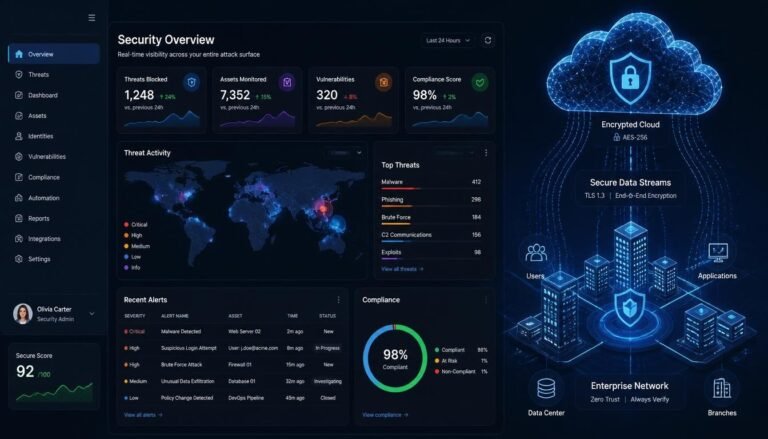
Selling software to mid-market and enterprise buyers requires proving absolute data integrity and regulatory alignment. Platforms must transition away from security-by-obscurity models toward formal compliance frame models like SOC 2 (Type II), ISO 27001, and GDPR. Engineering squads must build immutable security pipelines that include end-to-end data encryption (both at rest and in transit), centralized single sign-on (SSO) authentication matrices, and continuous background vulnerability scanning across the entire active code base.
API Infrastructure and System Integration Frameworks
A modern software platform operates as part of an interconnected enterprise ecosystem. Your API layer must serve as an open, secure, and resilient gateway for external data exchanges. Engineering teams must deploy advanced API management architectures that enforce strict rate-limiting, token-based authentication models, and real-time response payload caching. By constructing clean, well-documented API endpoints, an enterprise turns its infrastructure into a flexible integration hub that can connect smoothly with other enterprise networks.
3. Disaster Recovery and Incident Response: Planning for the Worst Case
A single hour of unexpected system downtime can result in massive financial penalties, broken service-level agreements (SLAs), and permanent brand damage. Building an institutional software asset requires engineering a robust disaster recovery framework.
Automated Data Backup and Recovery Architectures
Relying on simple, localized nightly database backups introduces massive windows for data loss. Modern data architecture requires configuring cross-region, automated snapshot replication setups that operate with zero human intervention. Engineering documentation must explicitly outline the platform’s Recovery Point Objective (RPO) and Recovery Time Objective (RTO). Backups must be systematically tested via automated sandboxed recovery drills to guarantee that customer data assets can be completely restored within minutes of a physical data center outage.
Constructing an Institutional Incident Response Plan
When a security vulnerability is exposed or a system outage occurs, confusion inside the engineering department accelerates the crisis. An enterprise governance profile requires a documented incident response plan that activates instantly during an exploit event. This framework assigns precise operational roles (such as Security Lead, Communications Officer, and System Remediation Engineer), establishes secure, out-of-band communication channels, and defines strict regulatory notification windows for informing users and legal authorities of a data breach.
4. Step-by-Step Infrastructure Execution Framework
Deploying an institutional-grade backend environment requires following a strict, chronological deployment track designed to eliminate human error during manual configuration changes.
Phase 1: Infrastructure as Code (IaC) Standardization
Before deploying software code to a production environment, engineering teams must automate the underlying hardware layout.
- Declarative Configuration Sprints: Define all cloud environments (Development, Staging, and Production) using Infrastructure as Code (IaC) languages like Terraform or OpenTofu.
- Environment Parity Control: Eliminate configuration drift by ensuring that staging sandboxes mirror production environments perfectly, preventing hidden deployment bugs from entering the live market.
- Zero-Trust Network Segregation: Isolate core production databases behind strict Virtual Private Clouds (VPCs) with no direct public internet exposure.
Phase 2: Deploying Continuous Integration and Continuous Deployment (CI/CD)
Once the underlying hardware provisioning is automated, operations teams deploy secure code delivery tracks.
- Automated QA Gateways: Integrate mandatory static application security testing (SAST) and automated software QA testing sequences into your version control repository before any code merge is authorized.
- Canary and Blue-Green Deployments: Route new feature releases to a small subset (e.g., 5%) of live infrastructure instances to verify system stability before completing a full deployment rollout.
Phase 3: Observability and Predictive Monitoring Setup
The final operational stage integrates deep telemetry analytics across the entire infrastructure footprint to detect performance drops before they impact users.
- Real-Time Log Aggregation: Centralize system logs, error metrics, and response latency data into an observability dashboard (such as Datadog or Prometheus).
- Predictive Alert Thresholds: Configure automated alerts based on memory leaks, CPU spikes, or unusual API traffic patterns to instantly notify the engineering team before an outage occurs.
5. Technical Pitfalls, Infrastructure Mistakes, and Risk Mitigation
The most dangerous and expensive mistake in modern software engineering is Technical Debt Accumulation. When an organization prioritizes shipping superficial frontend features while neglecting critical database maintenance, security patches, and server upgrades, the system architecture becomes brittle and vulnerable to cyber exploits.
To insulate your software platform from technical decay, technology leads must enforce clear guardrails:
- Dedicated Refactoring Sprints: Mandate that a fixed percentage (e.g., 20%) of every engineering cycle be allocated exclusively to resolving technical debt and updating dependency packages.
- Continuous Vendor Risk Management: Routinely audit third-party open-source libraries and vendor integrations to prevent supply-chain vulnerabilities from compromising your software core.
- Immutable Deployment Rules: Strictly prohibit manual “hot-fixing” or direct server configuration changes on production hardware; all alterations must pass through the verified CI/CD loop.
6. Active Technical Blueprints & Infrastructure Resource Index
The physical engineering of a highly secure, cost-optimized cloud environment requires accessing real-world infrastructure checklists, security policies, and deployment templates.
Review our latest published documentation below to audit your cloud spend, check your data privacy configurations, and deploy enterprise-ready infrastructure blueprints inside your live engineering environment.
-
Essential Guide to Choosing a Scalable SaaS Tech Stack
Choosing the right SaaS tech stack is crucial for growth.
-
Essential Checklist for Rapid SaaS MVP Development and Launch
Launch your SaaS MVP with this essential checklist.
-
Essential SaaS Data Backup and Recovery Checklist for Enterprises
Essential steps for effective SaaS data backup and recovery.
-
Essential Guide to Creating Your SaaS Incident Response Plan
Build a robust SaaS incident response plan for success.
-
Essential GDPR Compliance Checklist Every SaaS Business Needs
Streamline your SaaS business with this GDPR compliance guide.
-
Mastering SaaS API Integration: A Comprehensive Guide for Growth
Mastering SaaS API integration drives scalable growth effectively.