SaaS Conversion Funnels That Generate Explosive Revenue
A SaaS conversion funnel describes how potential customers move from initial discovery through evaluation, purchase and early product use. No funnel can guarantee explosive revenue. Its practical value is to show where suitable prospects disengage, where the experience creates friction and whether new customers go on to achieve value.
Map the buying journey
Define stages that reflect the business model. A self-service product may track visit, signup, activation, trial conversion and renewal. An enterprise sale may include qualified opportunity, technical validation, procurement, implementation and adoption. Make stage definitions consistent across teams.
Measure progression accurately
Track both the number of prospects reaching each stage and the conversion rate between stages. Document event definitions, reporting windows and identity rules. Validate tracking for duplicate events, missing records and changes to the product journey.
Segment by intent and customer fit
Compare results by acquisition source, use case, plan, company size and role where sample sizes permit. A high overall conversion rate may hide poor outcomes for an important segment. Separate qualified progression from low-intent activity.
Investigate friction
Use usability tests, customer interviews, sales feedback and support data to understand drop-offs. Common causes include unclear pricing, missing proof, complex forms, integration concerns or a product that does not match the buyer’s needs. Do not remove useful qualification steps just to increase volume.
Improve the relevant stage
Test changes to messaging, landing pages, trial setup, demonstrations or checkout according to the diagnosed issue. Define a hypothesis and success measure in advance. Monitor guardrails such as lead quality, refunds, support demand and retention.
Connect conversion to economics
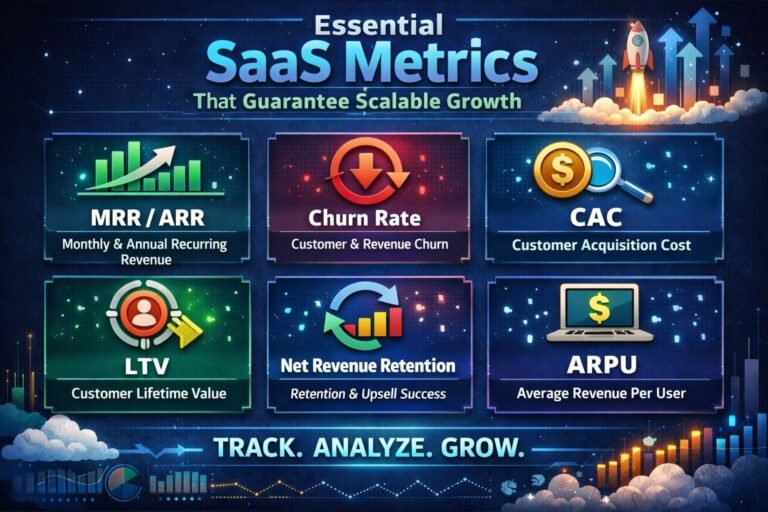
Review acquisition cost, sales cycle, average contract value, gross margin, payback and retention alongside funnel rates. A conversion improvement is not necessarily valuable if it increases discounting or attracts customers who churn early.
Build a continuous review process
Assign owners to each stage, review performance on a regular cadence and document actions. Revisit the funnel when pricing, product capabilities, channels or buyer behaviour change.
Conclusion
Effective SaaS funnel optimisation is evidence-led and full-lifecycle. It improves qualified progression while protecting the customer fit and economics that support recurring revenue.
Worked example: diagnose a conversion funnel drop-off
A SaaS website attracts qualified visitors, but many leave during the trial registration process. Analyse the journey by device, acquisition source and customer segment. If the form requests information that is not needed to create an account, test removing those fields. If users abandon at a required business verification step, explain why the information is needed and how it will be used rather than removing a necessary safeguard.
Measure completion and downstream activation, not just form submissions. Keep a record of changes and compare results over an appropriate period, accounting for seasonality and traffic mix.
Conversion funnel checklist
- Map the buying journey and measure each stage.
- Segment by intent and customer fit.
- Investigate friction with user evidence.
- Improve the relevant stage and test carefully.
- Connect conversion to customer economics.
Worked example: diagnose a conversion funnel drop-off
A SaaS website attracts qualified visitors, but many leave during trial registration. Analyse the journey by device, acquisition source and customer segment. If the form requests information not needed to create an account, test removing those fields. If users abandon at a required business verification step, explain why the information is needed and how it will be used rather than removing a necessary safeguard.
Measure completion and downstream activation, not just form submissions. Keep a record of changes and compare results over an appropriate period, accounting for seasonality and traffic mix.
Conversion funnel checklist
- Map the buying journey and measure each stage.
- Segment by intent and customer fit.
- Investigate friction with user evidence.
- Improve the relevant stage and test carefully.
- Connect conversion to customer economics.